For Once I’m Not the One Having an Identity Crisis
Hello from the University of Washington, where I’m attending the Northwest Dispute Resolution Conference. Traditionally, attendees (mainly mediators and arbitrators) come for continuing education as “neutrals”—people whose professional codes require a certain remove in the face of conflict.
This year, however, both in formal sessions and in the hallways, instead of exchanging the usual tips and tricks, some conference attendees are questioning the value—and even the ethics—of neutrality itself. In a world increasingly dire, unjust, and unequal, when is neutrality still moral? When does it become a cop-out?
I keep a spreadsheet listing all my mediations. I don’t include any identifying details (we really do shred our notes right after each session), but I do record whether the parties reached a settlement. So far, I’ve seen about 85% of my cases result in a signed agreement. These miniature peace treaties are things of beauty in my mind: so hard to craft and worryingly fragile—but often the most promising turn in the lives of those affected for a very long time.
I understand the growing discomfort with working as a neutral in polarized times. Especially in contrast to bold activism, it looks awfully “both sides”-ish. But the more I do this work, the more I believe in it—and the more I realize what a source of hope it is for me:
Every week, I bear witness to collaborative decision making, even amid great pain, deep scars, and abiding differences. Democracy is, at its core, more of the same: communities working through things.
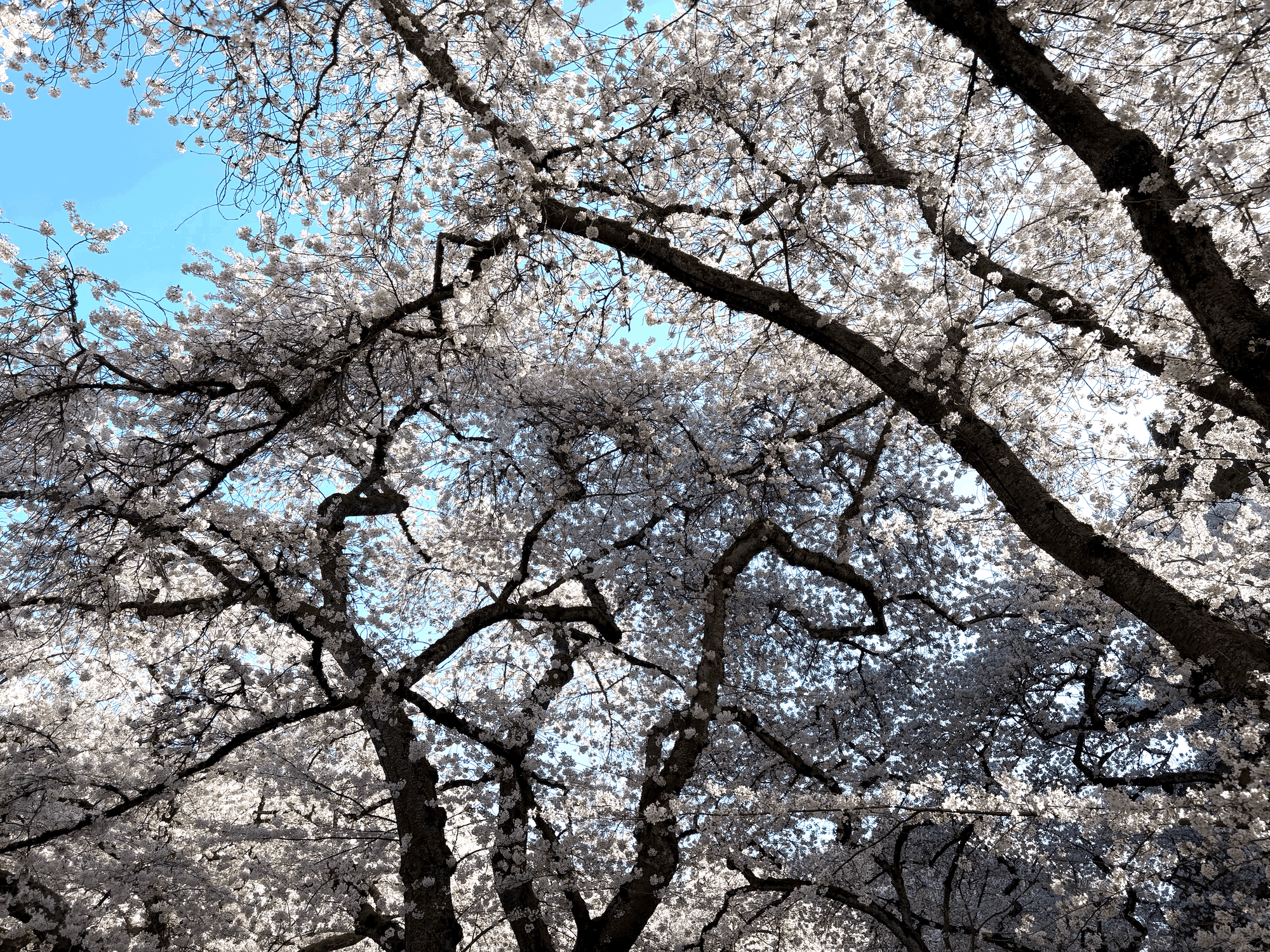
I’m not saying it’s comfortable. Like UW’s* famed cherry blossoms, it can make you want to scratch your eyes out. But also: look. So beautiful.
___
*For non-local readers: UW is pronounced “UDub.” Saying it any other way—much like using an umbrella in Seattle—simply telegraphs that you’re from out of town.