Chaos—and the SOB
Every month I meet for a half day with the two people who lead the company I own. These appointments show up on my calendar as SOBs, not because my Co-CEOs are unpleasant—they are two of my favorite people in the world—but because the purpose of these meetings is to review the State of the Business.
Financial results are always evaluated against expectations: analysts’ targets for public companies; actuals-versus-plan for private ones.
For public companies, meeting or exceeding expectations is typically good for the stock price, and as long as the company’s cash position is strong, even big misses (e.g. $80 billion on the Metaverse) can be absorbed.
In contrast, small businesses have very little, if any, margin for error. To survive—let alone thrive—most of our bets need to pan out. If revenues tank, costs spike, or ::gulp:: both happen at once, the whole enterprise starts to wobble.
One reason my company—founded by Marty Steyer in 1995—made it to its 30th (!) birthday last year is that the team is as good at forecasting as they are at executing. In the past, because we could reliably predict revenue, we had a solid sense of what we could invest.
These days, it’s harder and harder to predict anything.
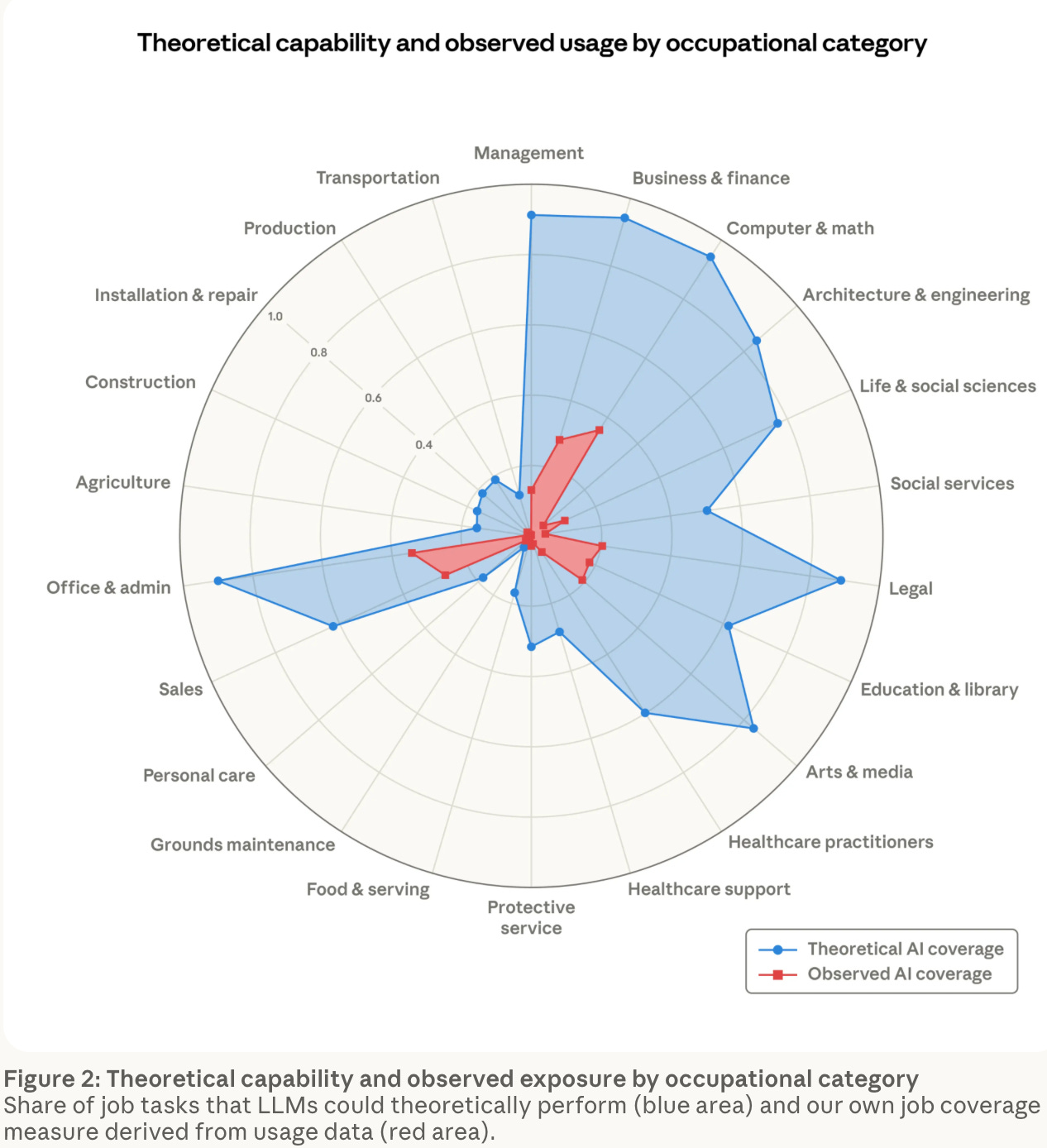
We all know that AI is roiling the working world. This diagram from last month’s Anthropic report on the labor marketshows what job types have already been impacted by AI (the red zone) and the company’s best guess at where things will go (the blue zone). I write to you from squarely in the red.
The thing is, though, “roiled by technological change” has arguably been the story of business—and really every human endeavor—since the harnessing of fire. I worry the U.S. doesn’t have the social safety nets we need (e.g. universal healthcare) when change is coming to so many, so quickly. And I shake my fist at the sky that we—the whole human species—aren’t taking AI safety more seriously. But I’m no doomer. Not only do I believe that many people and businesses will thrive in the age of AI; I believe with all my heart that my business will make it.
This brings me to what the world needs now. Love, sure, but even more urgently: CALM. Or, at the very least, for the president of the United States to stop adding uncertainty in times that are already as disorienting as most people can manage.
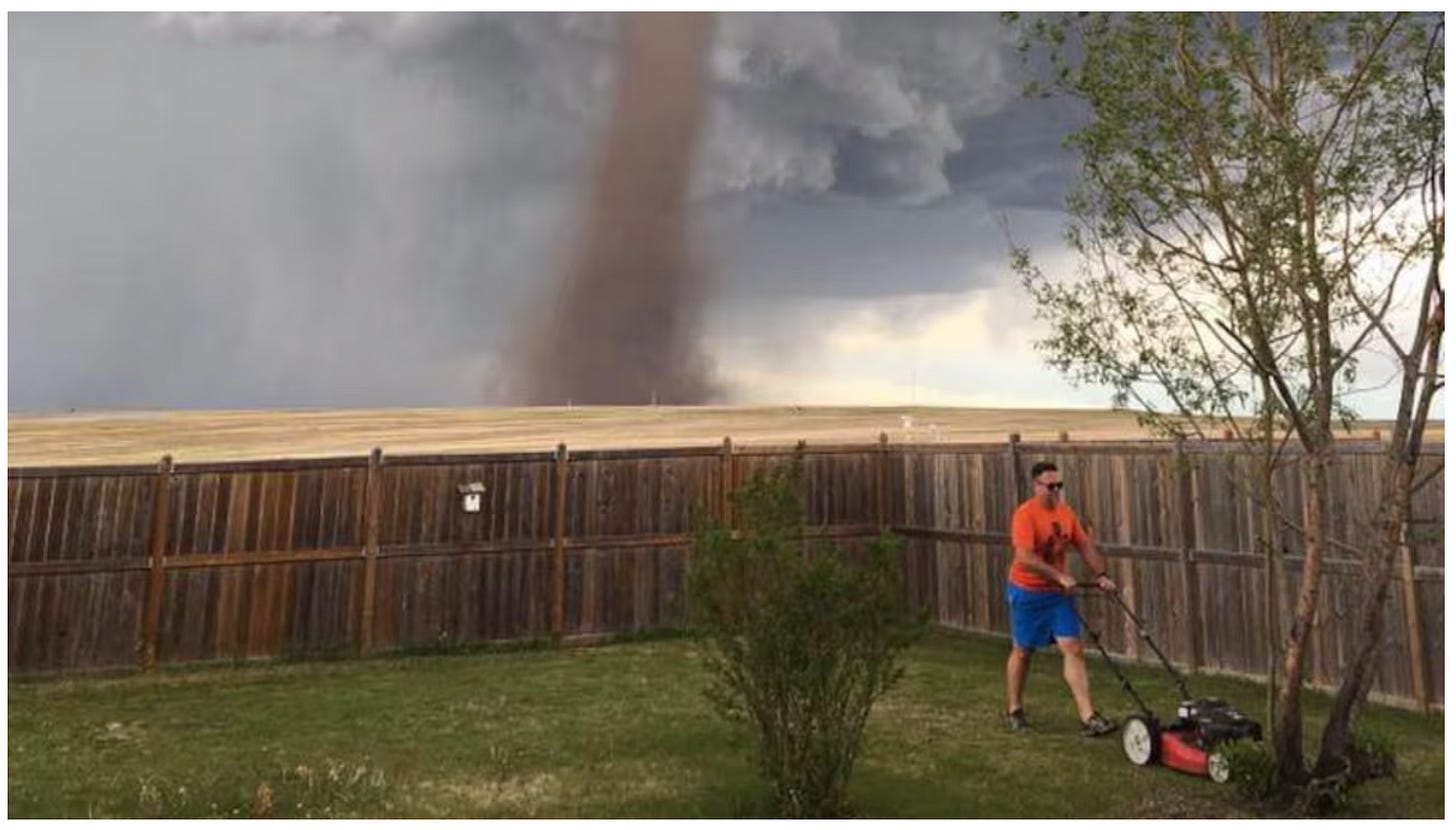
What we need, and do not have, is a baseline level of political stability. We can’t keep having days like Tuesday. That day, every person in the world had to go about their work weighed down by Trump’s unhinged threats: “A whole civilization will die tonight, never to be brought back again.” In the ensuing hours, this 2017 photo (image credit here) quickly became a meme, capturing what it felt like to be anyone trying to complete anything:
And of course Tuesday was just Trump at arguably his most destabilized, and destabilizing, to date. Arbitrary tariffs, ICE raids, disregard for the rule of law—none of this is good for business.
Given the administration’s cruelty to so many human beings, it may seem callous to point out that Trump, and the chaos he creates, is bad for most companies. I do so not because it’s more important than moral outrage, but because it may be more strategic.
One of the most intriguing pieces I read this week pointed out that it would take only three House Republicans to install a meaningful check on our dangerous president. I suspect I have a lot of ideological differences with the representatives mentioned in the piece (Don Bacon of Nebraska, Michael McCaul of Texas, and Dan Newhouse of Washington), but I bet they all care about business—and small businesses in particular, which account for 99.9% of U.S. companies, 43% of GDP, and nearly 46% of private sector employment.
Appealing to their sense of right and wrong—whether the president is acting constitutionally—is probably the best way to start the conversation. But appealing to their pragmatism—how can businesses operate effectively when they’re being yanked around by a madman?—may be the way to close the deal. After all, November is coming fast and, as always, it’s the economy, stupid.
Thanks for reading,
Kate